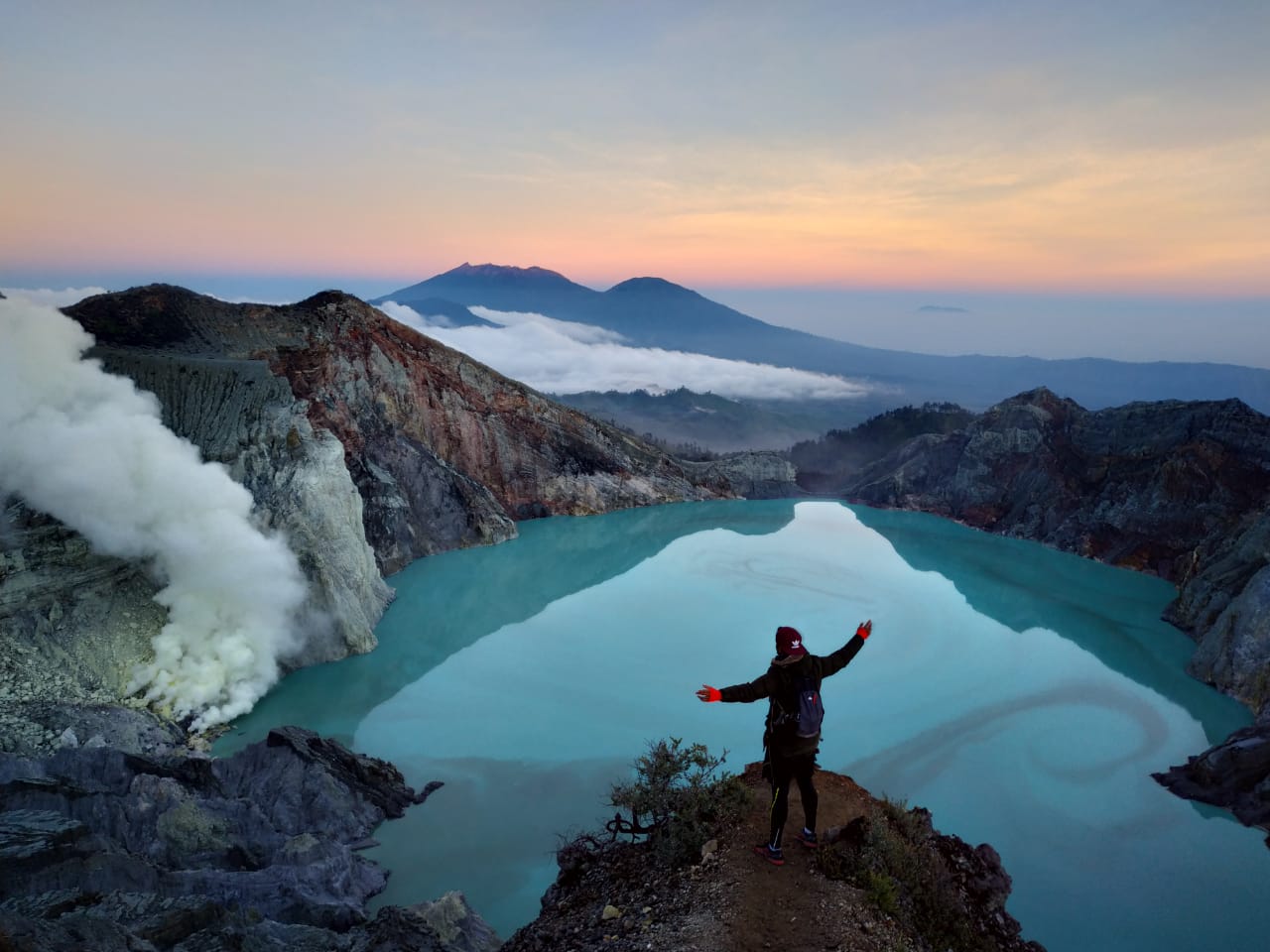
Ijen Crater
Altitude
2769 masl
Temp
5-10°C at night
Difficulty
moderate
Duration
4–5 hours round trip
Kawah Ijen is the world's largest acidic crater lake and one of only two places where natural blue fire appears at night.
Blue Fire Phenomenon
Witness the surreal blue flames that appear only at night due to combustion of sulfuric gases
Acidic Crater Lake
See the world's largest acidic lake with stunning turquoise color and pH levels below 0.5
Sulfur Mining Culture
Observe traditional sulfur miners extracting and carrying sulfur blocks in extreme conditions
Sunrise Panorama
Experience breathtaking sunrise views over the crater lake and surrounding mountains
Trail & Logistics
Terrain & Trail
Steep volcanic gravel trails, rocky crater descent, sulfur-rich areas
3km ascent (1.5-2 hours) to crater rim, 1km descent (30-45 mins) to crater floor. Steep gradient (30-40°), volcanic gravel surface.
Required Gear
wind speed
10-25 km/h
humidity
70-95 %
air quality_index
150-300
uv radiation
8-11 index
visibility
1-10 km
Visitor Tips
Start trek at midnight (01:00 AM) for blue fire viewing, bring multiple warm layers as temperatures drop to 5°C, wear sturdy hiking boots with good grip, carry headlamp with extra batteries, acclimatize to altitude if coming from sea level, hire local guide for safety and cultural insights
Safety Protocol
Important Safety Notes
- Gas mask mandatory near crater - sulfur dioxide levels can be dangerous
- Stay on marked paths and follow guide instructions at all times
- Carry sufficient water and energy snacks for the trek
- Wear appropriate hiking shoes with good grip
- Complete health screening as required by JVTO safety protocols
Cultural Significance
"Locals view Ijen as 'Gunung sing urip' — the living mountain. The Tenggerese and Osing communities consider the volcano sacred and make offerings during the Javanese month of Suro for protection and gratitude. The sulfur miners, known as 'Wong Ijen', have worked the volcano for generations, developing unique cultural practices around their dangerous profession. The volcano represents the element of Fire in Javanese cosmology - symbolizing power, creation, and purification."