What the Access Rule Is :
BBKSDA Jawa Timur — the government conservation agency responsible for the Kawah Ijen Natural Tourism Park — reopened the crater on 6 January 2024 and introduced the doctor's-letter requirement for entry. The circular is reported as Surat Edaran SE.35/K2/BIDTEK.1/KSA/1/2024 by TIMES Indonesia, which quotes the head of the TWA Kawah Ijen post on the requirement; Kompas reported the same reopening conditions, including "wajib menunjukan surat keterangan sehat dari dokter". We do not yet hold the circular itself, so unlike every other document on this site it is cited from the press rather than published here with its SHA-256 — we would rather say that than imply we have a file we do not. The later September 2024 circular, SE.1658/K2/BIDTEK.1/KSA/9/2024, is the crater-reopening record: it refers to the health protocol already in force rather than restating it; that one is published and hashed.
A health certificate is mandatory for every guest before Kawah Ijen crater entry. The requirement itself is not in doubt — it is reported by several national outlets and enforced at the gate. JVTO coordinates the mandatory health-screening workflow under this regulation.
The certificate requirement is regulatory, set by BBKSDA East Java. It is not unilaterally imposed by JVTO — BBKSDA sets the rule; JVTO coordinates the workflow so every crater-zone guest can satisfy it. At the crater access gate, checkpoint staff check the certificate. No valid health certificate means no crater-zone access.
Why the Screening Is Real — and Why That Matters
The Kawah Ijen ascent is genuinely demanding, and the authorities have attributed multiple visitor deaths on the trail to breathlessness, exhaustion and pre-existing conditions — a 49-year-old visitor from Bogor in 2015, a 64-year-old visitor from Jakarta in 2023, and a 53-year-old Polish visitor in 2024, each of whom collapsed on the climb (detikNews, 2015; detikJatim, 2023; kumparan, 2024). It is a steep, gas-exposed route with limited evacuation options, and physical fitness genuinely matters.
That is why BBKSDA Jawa Timur has, since January 2024, required a doctor-issued health certificate (surat keterangan sehat) for every Kawah Ijen visitor — to keep people who are unwell or who have conditions such as asthma or heart disease from being cleared to force the ascent (TIMES Indonesia, 2024; Liputan6, 2024).
But a certificate only protects anyone if the screening behind it is real. Within weeks of the rule, authorities found counterfeit surat sehat in circulation: BBKSDA and TWA Ijen ticket-counter staff flagged two forged certificates, and the Banyuwangi Health Office (Dinkes) confirmed the doctor signatures were not genuine. The forgeries were traced to a former employee of Puskesmas Kabat, who had scanned a doctor's signature onto certificates carrying the clinic's letterhead; the Health Office responded with a circular barring any certificate issued without a genuine medical examination (Liputan6, 2024; Kabar Banyuwangi, 2024; BWI24JAM, 2024).
JVTO's screening is the real thing. It is an actual examination by a named, SIP-licensed doctor — Dr. Ahmad Irwandanu — that produces a genuine certificate, not a scanned signature or a purchased form. The certificate is signed with a BSrE (Balai Sertifikasi Elektronik / BSSN) electronic signature — Indonesia's national electronic-certification standard, legally valid under UU ITE — so it is a recorded, licensed, tamper-evident document traceable to the licensed doctor who issued it. JVTO makes no claim about what the Ijen ticket gate does or does not verify — the point is simply that the screening behind the certificate is genuinely carried out by a medical professional, not self-issued or purchased. The screening is included in the package and carried out at your hotel before departure. That is exactly the safeguard the BBKSDA rule exists to protect: no valid health certificate, no crater access.
Sources
- detikNews (2015) — visitor death on the Gunung Ijen ascent: https://news.detik.com/berita-jawa-timur/d-3040438/lagi-wisatawan-asal-bogor-meninggal-saat-mendaki-gunung-ijen
- detikJatim (2023) — visitor death after the Kawah Ijen climb: https://www.detik.com/jatim/wisata/d-7116796/wisatawan-asal-jakarta-meninggal-usai-daki-kawah-ijen-banyuwangi
- kumparan (2024) — visitor death on the Kawah Ijen ascent: https://kumparan.com/kumparannews/turis-asal-polandia-tewas-saat-mendaki-kawah-ijen-diduga-kelelahan-22B6m8T4WRj
- TIMES Indonesia (2024) — Kawah Ijen visitors required to carry a health certificate: https://banyuwangi.times.co.id/news/peristiwa/e1oqyrujmv/pengunjung-kawah-ijen-wajib-bawa-surat-keterangan-sehat
- Portal Kabar Banyuwangi (2024) — counterfeit health certificates used to enter TWA Ijen: https://kabarbanyuwangi.co.id/suket-sehat-diduga-abalabal-beredar-digunakan-wisatawan-masuk-ke-twa-ijen
- Liputan6 (2024) — forged Ijen health certificate traced to a former Puskesmas Kabat employee: https://www.liputan6.com/surabaya/read/5510716/terkuak-pemalsu-surat-sehat-ke-kawah-ijen-adalah-mantan-pegawai-puskesmas-kabat-banyuwangi
- BWI24JAM (2024) — Dinkes Banyuwangi warning after suspected certificate forgery: https://bwi24jam.co.id/temukan-dugaan-pemalsuan-sks-untuk-mendaki-kawah-ijen-dinkes-banyuwangi-beri-peringatan
What the Screening Checks
The health screening is conducted by licensed medical staff. Vitals measured include:
- SpO2 (blood oxygen saturation)
- Blood pressure
- Heart rate
- Respiratory history
Results are recorded digitally on a BSrE-signed certificate. The BSrE (Balai Sertifikasi Elektronik / BSSN) electronic signature — a legally valid e-signature under UU ITE, traceable to the doctor's SIP — makes the certificate accountable and tamper-evident, a safeguard against a forged or self-issued paper copy. A valid certificate is checked at the crater access gate.
The Process — How JVTO Coordinates It
For every guest on an Ijen crater route, JVTO arranges the following mandatory sequence via the Ijen Digital Health Security System (https://health.mountijen.com):
- The screening doctor visits your hotel the evening before the Ijen hike — in the Bondowoso or Banyuwangi area. If you arrange your own accommodation outside our package hotels, the screening is done at the JVTO office instead.
- Vitals are checked at your accommodation. No travel to a clinic is required.
- The BSrE-signed digital certificate is issued for cleared guests.
- At the Paltuding trailhead, BBKSDA checkpoint staff check the certificate before permitting crater-zone access.
The entire session takes place at your hotel before departure, not on the trail.
Where screening takes place
Screening is done where you are already staying, the evening before the climb — a licensed physician attends the hotel, so no clinic trip is needed:
| Property | Location | Arrangement |
|---|---|---|
| Baratha Hotel | Bondowoso | Partner property — physician attends the hotel |
| Riverside Homestay | Bondowoso | Partner property — physician attends the hotel |
| Your own hotel | Where you stay | Mobile session by Dr. Irwandanu the evening before departure |
The Doctor — Verifiable Credentials
Health-screening coordination at JVTO uses licensed medical staff. The supervising physician is Dr. Ahmad Irwandanu, a general practitioner (Dokter Umum) whose licences can each be checked:
- STR
QN00001073380217is shown as "Tervalidasi" (validated) on the Kemenkes SatuSehat SDMK registry (checked 6 October 2026), with continuing-education (SKP) status "Tercukupi". The registry page prints no STR end date; the SIP document below states the STR runs to 6 January 2031. - SIP 503.446/664/DRU/4/430.9.13/2026, issued 6 January 2026 by the Bondowoso investment and one-stop service office (DPMPTSP) for his independent practice (Praktik Mandiri) in Pujer, Bondowoso. It is electronically signed with a BSrE certificate and published as a hashed PDF (SHA-256
82f2535b87066fef23cf3012ed3bc1cb18c124e03045ab544067e51d78ac80aa). The registry page does not list this SIP; the document carries a QR code for checking its authenticity. - SIP 503.446/658-1268/DRU/4/430.9.13/2025, issued 11 December 2025 and valid to 13 January 2031, for practice at RS Bhayangkara Bondowoso — listed on the same SatuSehat SDMK registry page.
The screening sessions themselves take place at the hotel where you stay, not at either practice address.
Screening is performed by a credentialed provider under an active government-issued licence — not a formality or a self-certification by JVTO.
What Happens If You Are Not Cleared to Hike
If screening staff or the JVTO team advise that you should not attempt the Ijen hike, that decision is followed. The climb is cancelled for that individual, not the group. Alternatives include waiting at base camp or a safe viewpoint area at Paltuding. The screening is included in your package and is not refunded if a guest is not cleared. The rest of the group continues.
This outcome protects the individual guest and other guests on the trail. The screening is not a barrier to tourism — it is a check that prevents sending a guest with an undetected condition into a demanding environment with sulphur gas, steep terrain, and limited evacuation options.
Screening Does Not Guarantee a Safe Hike
Health-certificate screening is a pre-hike assessment, not a guarantee. Conditions on the mountain can still change after screening is completed. JVTO may still cancel the hike after screening if volcanic gas, weather, or BBKSDA closures make the route unsafe. The certificate is a mandatory condition of access — it does not remove the operational risks of an active volcano environment.
Guests with heart, lung, or circulation conditions are advised to consult their own doctor before booking, in addition to the mandatory pre-hike screening.
Screening Photos
Evidence of the actual screening process, conducted at guests' hotels and, for guests on custom accommodation, at the JVTO office:
| Scene | Image |
|---|---|
| Blood pressure check at hotel lobby | 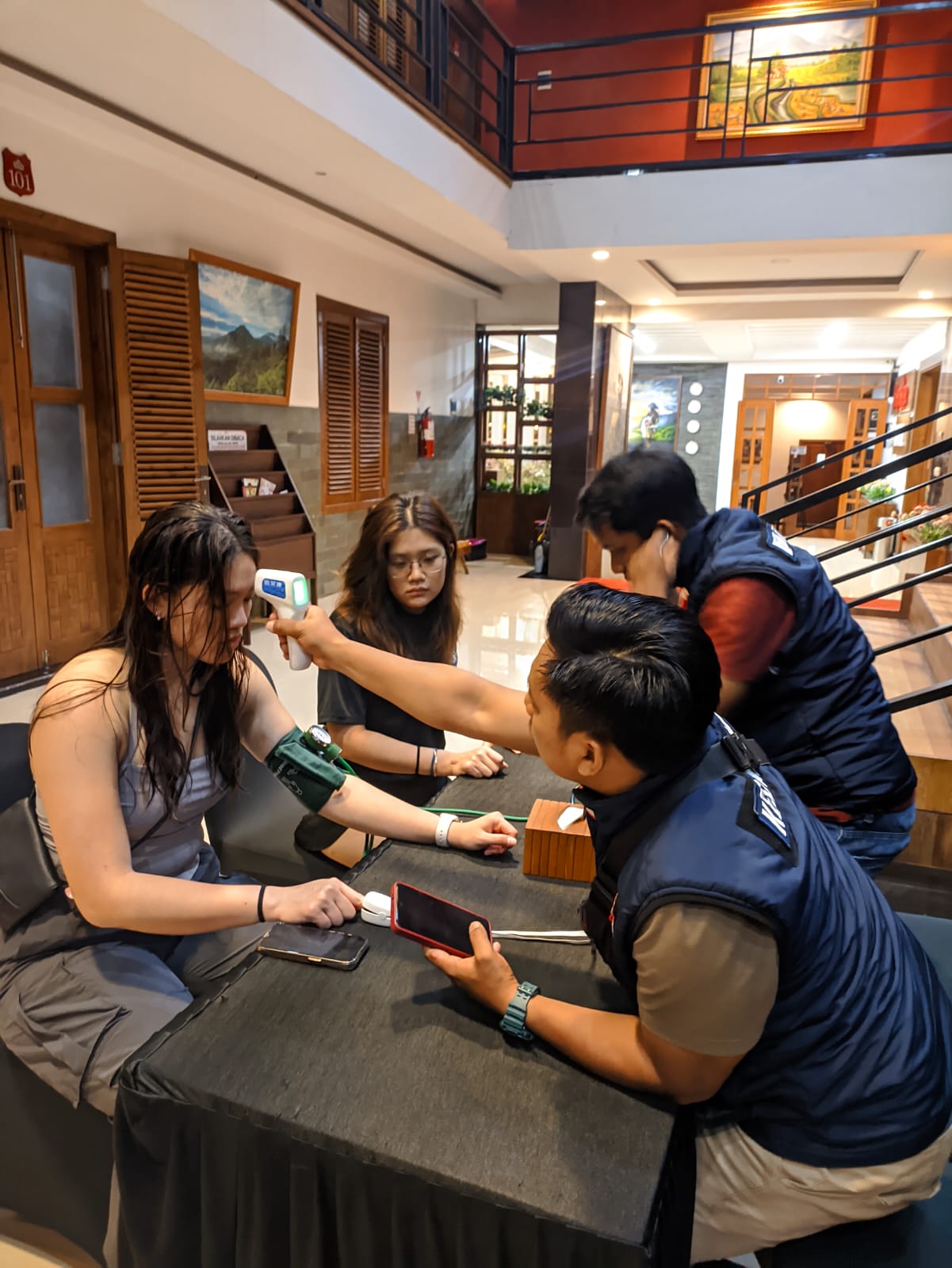 |
| Vitals recorded at hotel table before night ascent | 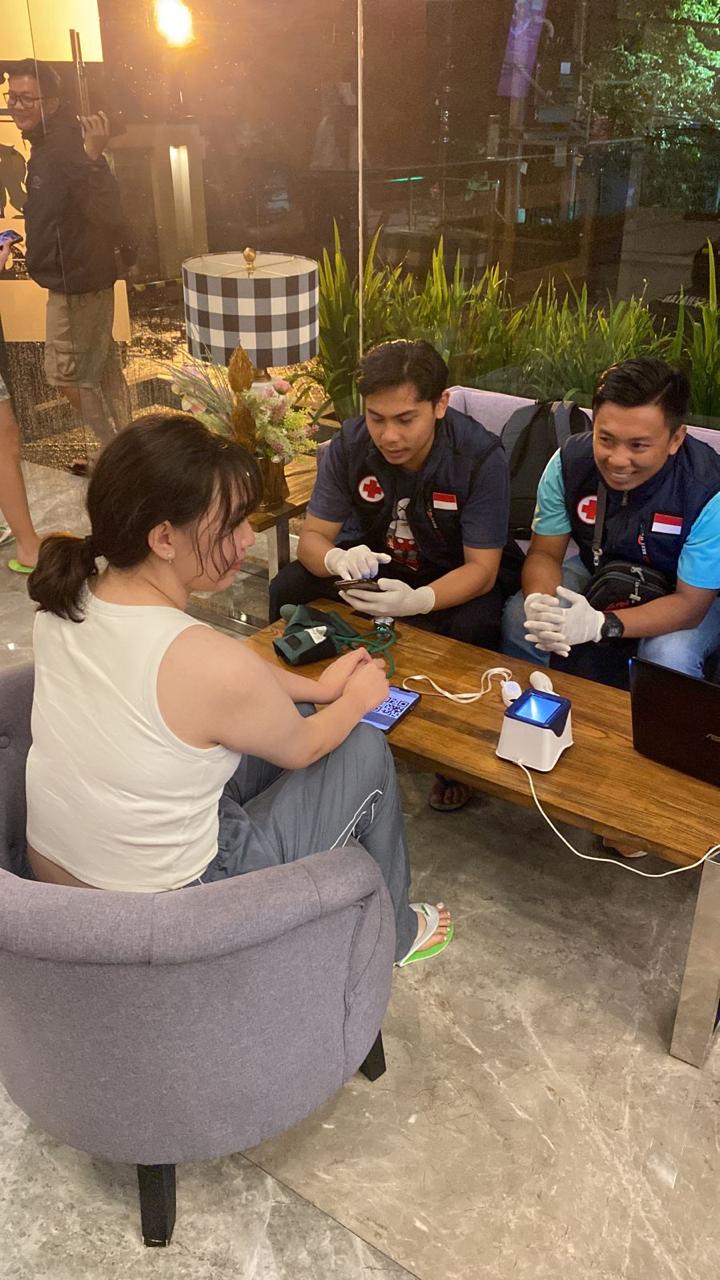 |
| Pulse oximeter (SpO2) reading by Dr. Ahmad Irwandanu at Baratha Hotel, Bondowoso | 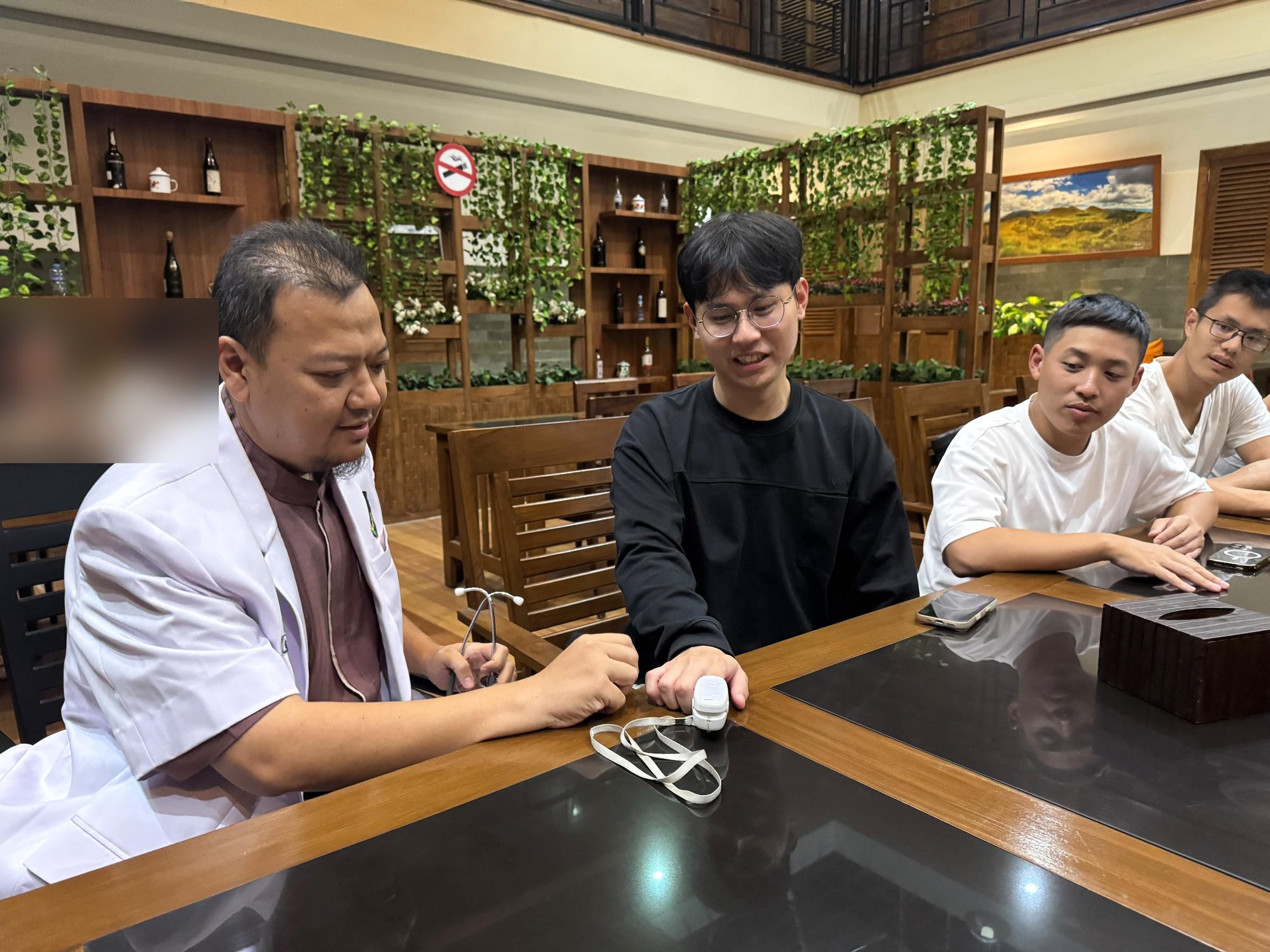 |
| Chest auscultation by Dr. Ahmad Irwandanu at Baratha Hotel, Bondowoso | 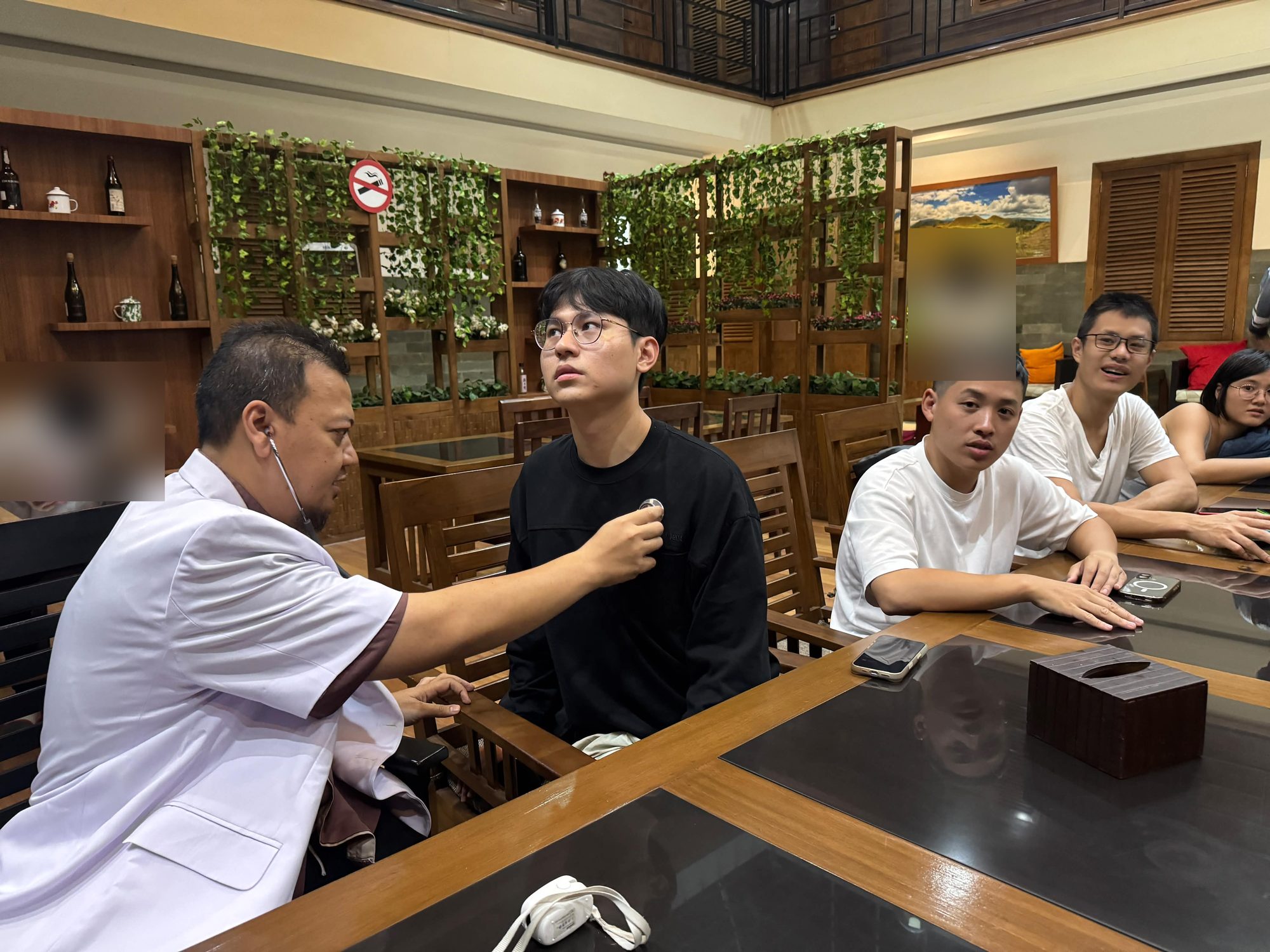 |
| Equipment set-up: pulse oximeter, blood-pressure cuff and stethoscope before the examination at Baratha Hotel, Bondowoso | 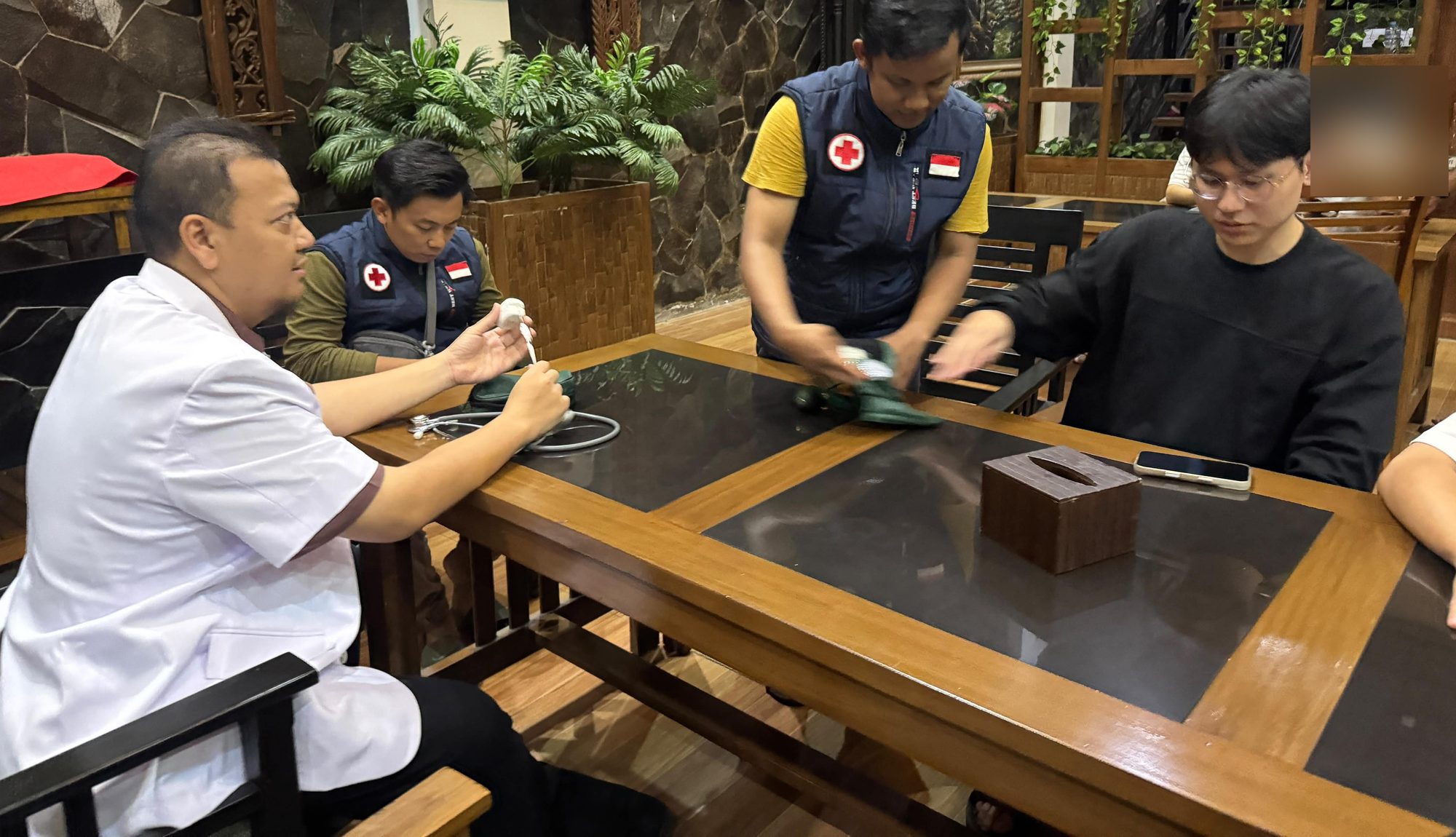 |
| Chest auscultation of a second guest by Dr. Ahmad Irwandanu at Baratha Hotel, Bondowoso | 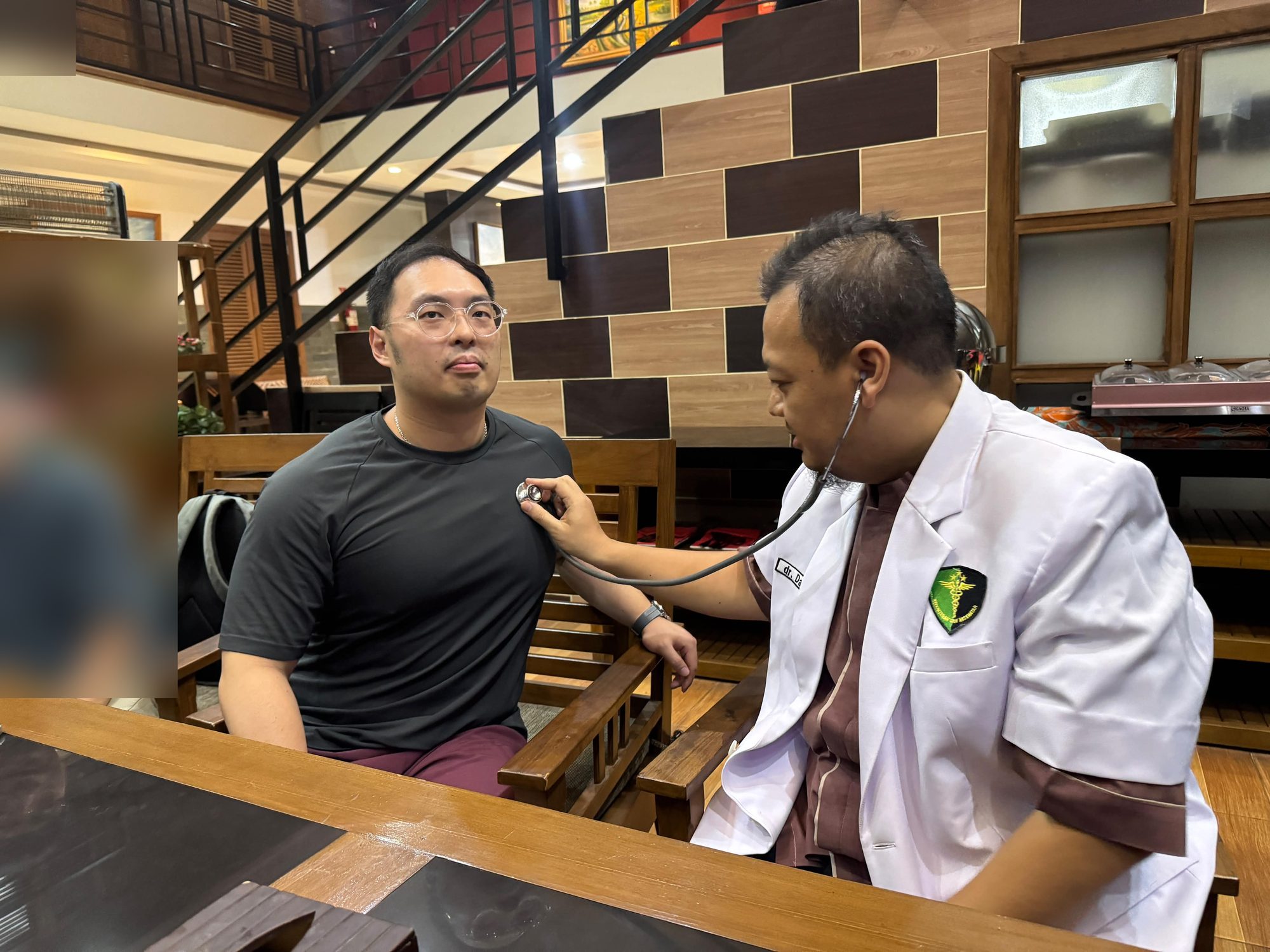 |
| Blood pressure check at the JVTO office (guest on custom accommodation) | 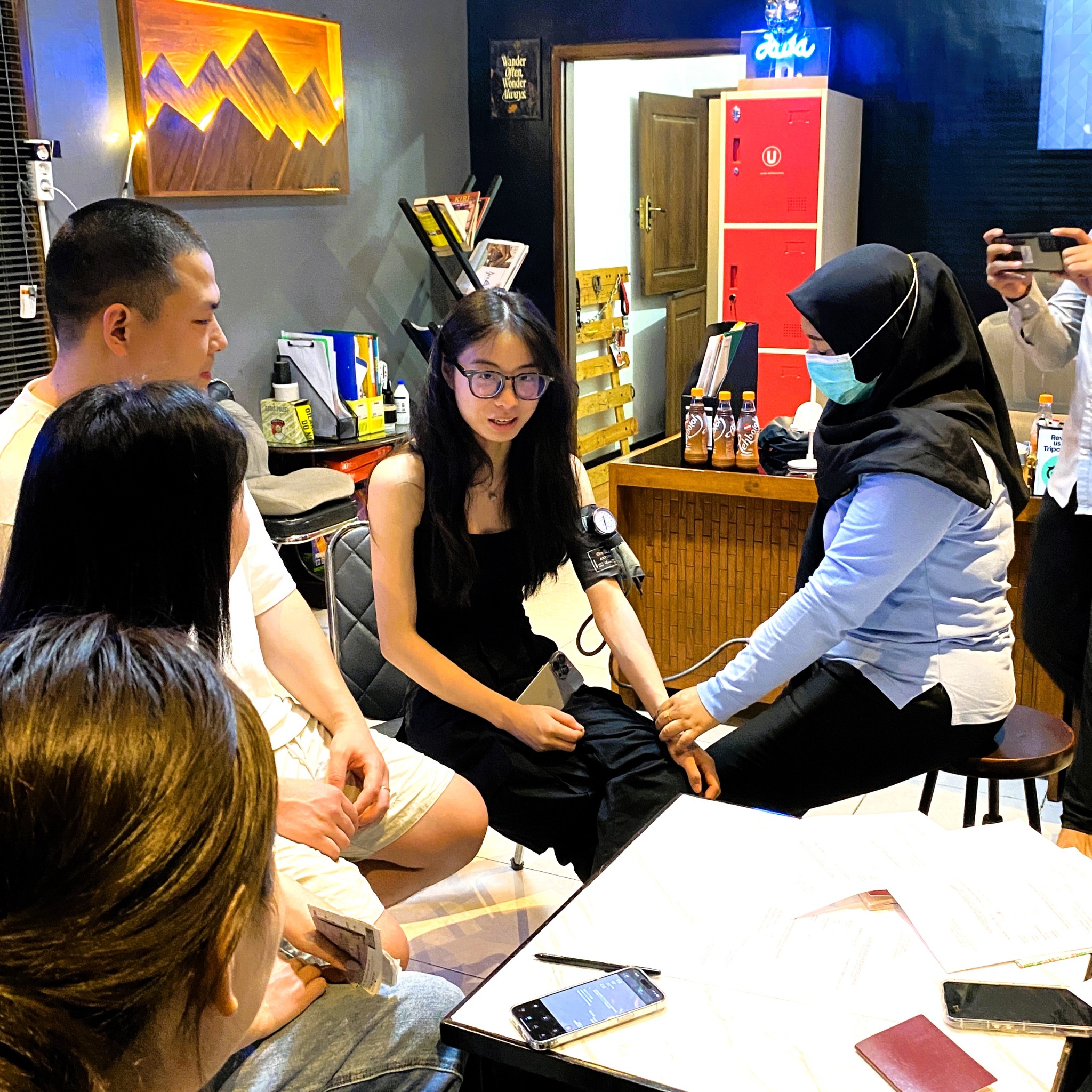 |
| Oxygen saturation check at the JVTO office (guest on custom accommodation) | 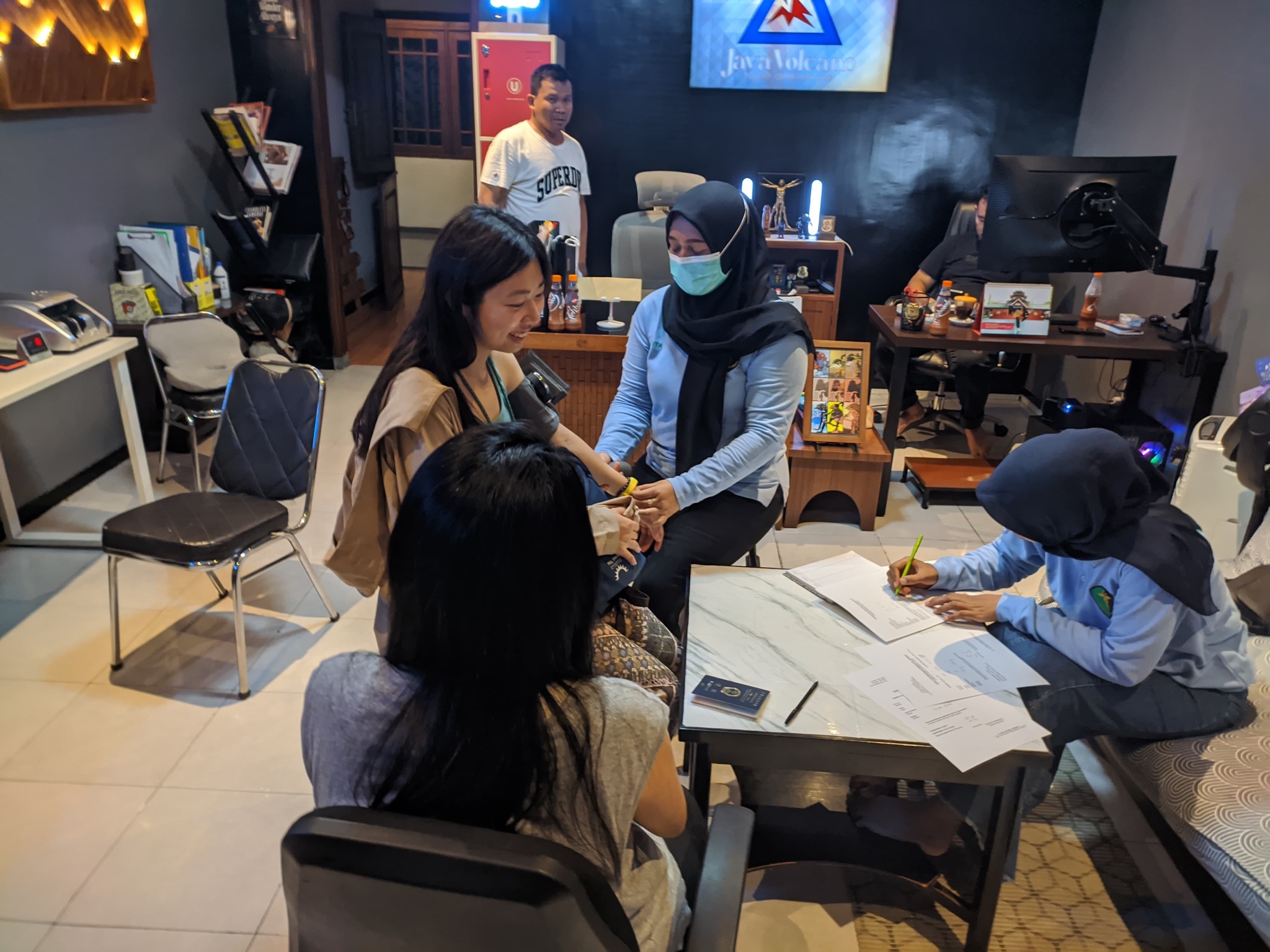 |
| Sample surat sehat (health clearance) printout | 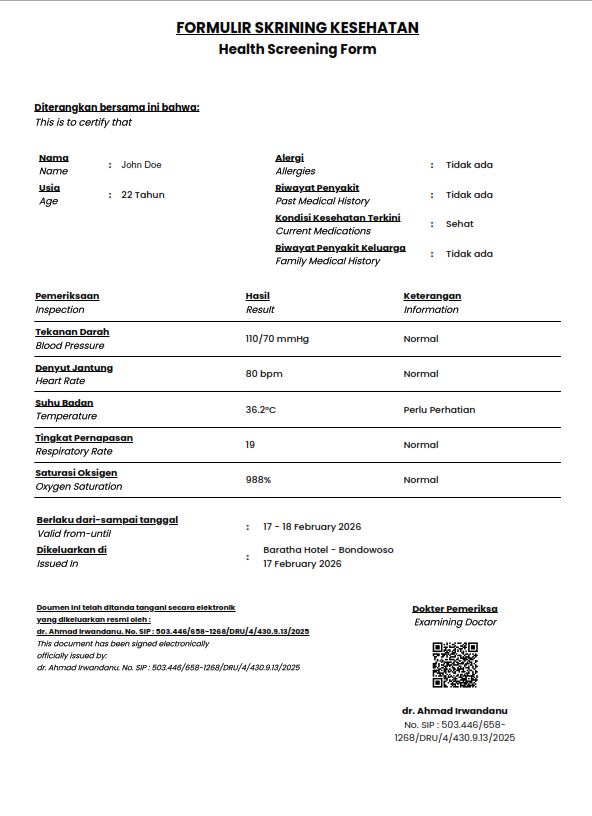 |
| BBKSDA ticket terms — health certificate requirement | 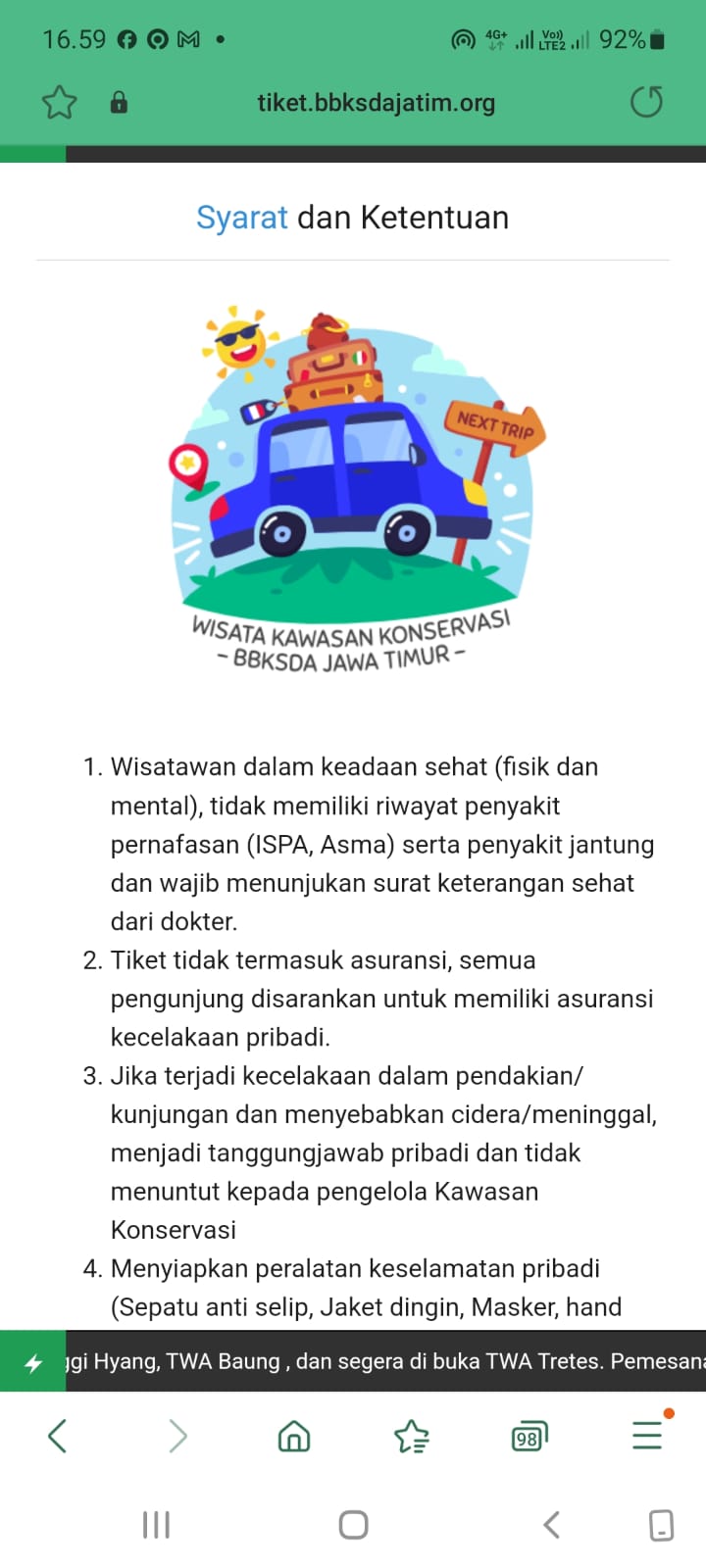 |
Asset note: health_screening group + uncertain group.
Reference values the screening doctor reads against
Every JVTO guest on an Ijen package is screened by Dr. Ahmad Irwandanu under the screening SOP IHS-SOP-001 (version 0.3), which he has confirmed. The SOP records four measurements and reads each one together with the measurement conditions, the guest's own baseline, other conditions and any symptoms. Its ranges come from published guidance: the Wilderness Medical Society 2024 acute-altitude-illness guideline, the BTS 2022 clinical statement on respiratory disease, FDA pulse-oximeter guidance, the American Heart Association and the 2024 ESC hypertension guideline. The final assessment is always the doctor's.
| Measurement | Baseline range | Re-measure | Priority finding | Doctor's step |
|---|---|---|---|---|
| SpO2 (lowland baseline) | ≥95% and stable | 92–94% confirmed | ≤91% persistent or with symptoms | Repeat the reading; clinical review for low values or symptoms |
| Blood pressure at rest | <140/<90 without symptoms | 140–179 or 90–109 | ≥180 or ≥110 after repeat; >180/120 with symptoms | Repeat the measurement and follow clinical assessment per AHA and ESC |
| Pulse after recovery | 50–100; 40–49 can fit an athlete's baseline | 101–119 persistent or doubtful rhythm | >120 persistent, <40 outside an athletic baseline, or arrhythmia with symptoms | Repeat after recovery and pass the finding to the doctor |
| Respiratory history and symptoms | No active symptoms | Doubtful asthma control, new infection or exacerbation | Active wheeze, breathlessness at rest, chest pain, cyanosis, confusion or ataxia | Doctor's assessment and action according to severity |
How each reading is taken:
- Before the trip, at a place below 1,500 m, the doctor records elevation, symptoms, medication and the status of any condition.
- The guest sits quietly for at least 5 minutes; measurements are not taken right after walking, smoking, caffeine or heavy activity.
- SpO2 is read with a stable signal and warm hands; blood pressure is measured with a correctly sized cuff; pulse and its regularity are recorded.
- If a value differs from the clinical picture, the reading is repeated on another finger or a verified device and every result is kept.
- The respiratory history covers asthma and how well it is controlled, COPD or other lung disease, pulmonary hypertension, sleep apnoea, oxygen or CPAP use, a recent exacerbation or infection, any history of high-altitude pulmonary oedema or serious altitude illness, and prescribed medication.
Recorded as priority clinical findings whatever the measured values are: chest pain or pressure, breathlessness at rest, cyanosis, inability to speak full sentences, severe wheeze; fainting or near-fainting, confusion, reduced consciousness, seizure, neurological deficit or ataxia; and blood pressure above 180/120 mmHg with acute cardiovascular or neurological symptoms.
Clinical governance: the doctor confirms the thresholds, reviews borderline and priority results, sets referrals and leads incident audits; diagnosis and clinical decisions rest with the doctor. Every reading, repeat, symptom, decision, location, elevation and time is kept in an audit trail. The SOP is reviewed at least every 12 months, after an incident, after a change in park rules, or when new validation data become available.
What you should do before the trip
- Disclose any pre-existing cardiovascular or respiratory condition in your inquiry form.
- Bring any home-country medical paperwork relevant to altitude or respiratory conditions.
- Get a good night of sleep before the screening session.
- Avoid alcohol the night before — it can register as elevated blood pressure.